

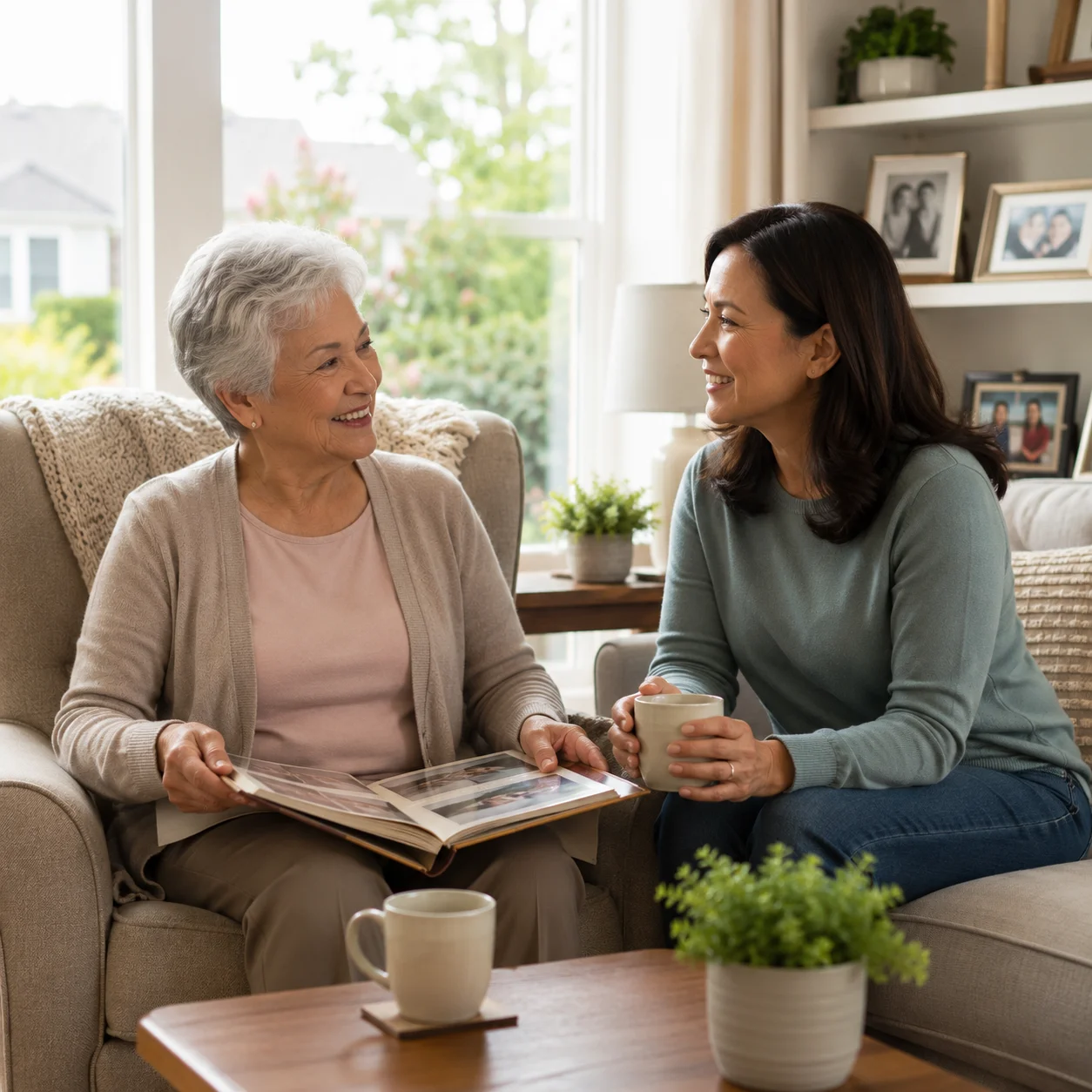
Aging in place allows your loved one to remain in familiar surroundings, keep more control over daily routines, and receive practical support at home as their needs change. For your family, the right help can also make caregiving responsibilities more manageable without requiring an immediate move from the home your loved one knows.
Aging in place does not mean handling every task alone. Your loved one may continue making choices about meals, activities, personal routines, and how the day is structured while receiving help in the areas that have become tiring or difficult.
At Angels Homecare, we understand why many older adults want to remain in a familiar home while keeping a meaningful say in their daily lives. Our non-medical care services show how dependable assistance may support your loved one’s comfort, dignity, and established routine.
1. Familiar Surroundings Can Provide Comfort
Remaining at home allows your loved one to stay surrounded by belongings, rooms, and everyday details that already feel familiar. This continuity can be especially meaningful when other parts of life are changing.
A preferred chair, family photographs, a familiar garden, and the usual view from a window may all contribute to a sense of comfort. Your loved one can continue spending time in the spaces they know rather than adjusting to an entirely different environment and schedule at once.
Family visits may also feel more natural at home. Relatives can sit in familiar rooms, share meals, and take part in routines that already have personal meaning.
Familiar surroundings do not remove every challenge, but they may make changes easier to introduce gradually. Support can be added to the home as certain tasks begin taking more time or effort.
2. Daily Routines and Personal Choices Can Stay Familiar
Aging in place gives your loved one more opportunity to maintain the preferences that shape their day. They may continue choosing when to wake up, what to wear, which activities to enjoy, and how to spend quiet time.
These choices matter because daily life often feels more manageable when it follows a recognizable rhythm. Help can focus on the tasks that have become difficult while leaving other routines unchanged.
For example, your loved one may want assistance with dressing or preparing the home while continuing to choose their meals and daily activities. The level of help can reflect what they need now rather than taking over every part of the day.
Everyday tasks can take more time or effort even when your loved one still feels most comfortable at home. Home care helps seniors stay safe and comfortable by providing practical support with familiar routines.
3. Relationships and Community Connections May Be Easier to Maintain
Remaining at home may help your loved one stay connected to relatives, friends, neighbors, and familiar community routines. These relationships often form an important part of how an older adult experiences daily life.
Friends and family members may find it easier to visit in a familiar setting. Your loved one may also continue participating in established religious, social, or neighborhood activities when those routines remain comfortable and practical.
Regular contact can become harder when relatives work, live farther away, or manage several responsibilities. Companionship at home can add social interaction and shared time during parts of the week when family members cannot be present.
The value comes from consistency rather than a packed schedule. A calm conversation, shared meal, familiar activity, or short visit may help your loved one remain connected without adding pressure to the day.
4. Practical Help Can Be Added at Home
Home care can support aging in place by helping with tasks that have become uncomfortable, tiring, or difficult to manage alone. The level of support can reflect what your loved one needs now and adjust as daily routines change.
That support may involve:
- Help with personal routines
- Regular companionship
- Household support
- Meal preparation
- Relief for a family caregiver
Support should focus on the areas where assistance is useful while allowing your loved one to remain involved in the choices and activities they can still manage comfortably.
As needs change, compassionate, non-medical home care can provide practical help with daily routines while your loved one remains in familiar surroundings.
Receiving help does not have to change the way the entire household operates. Support can be built around the routines, preferences, and responsibilities that already matter to your loved one.
5. Support at Home Can Make Family Caregiving More Manageable
Aging in place becomes easier to maintain when one family caregiver is not expected to handle every task, visit, and daily concern alone. Practical support can help distribute responsibilities more realistically.
You may be balancing caregiving with work, parenting, appointments, household responsibilities, or your own health needs. Relatives may also live too far away to help regularly.
Outside support can fill specific gaps without replacing your role in your loved one’s life. You may spend less time rushing through household tasks and more time being present as a son, daughter, spouse, or relative.
Respite care may also give you time to rest or attend to other commitments while your loved one continues receiving familiar support at home. It does not remove every caregiving challenge, but it can reduce some of the day-to-day strain placed on one person.
Aging in Place Should Change With Your Loved One’s Needs
Aging in place works best when the plan is reviewed as your loved one’s comfort, mobility, routines, and family support change. A level of help that works today may need to be adjusted later.
Watch for repeated patterns rather than one difficult day. Tasks taking longer, growing reliance on relatives, or changes in familiar routines may signal that additional support would be useful.
Our team at Angels Homecare can help you consider which non-medical services may make everyday life at home more manageable while respecting your loved one’s preferences.
If your loved one wants to remain at home but daily routines are becoming harder to manage, you can get in touch with us to discuss practical support that respects their comfort and choices.