


Falls can happen quickly, but a few practical changes can make everyday movement around the home easier to manage. Start by clearing common walkways, improving lighting, and keeping frequently used items within comfortable reach. It also helps to notice when your loved one has more difficulty with certain movements so you can adjust routines or add support when needed.
1. Keep Frequently Used Walkways Clear
Start with the paths your loved one uses every day, especially between the bedroom, bathroom, kitchen, and main living area. Loose rugs, electrical cords, or items left on the floor can make familiar routes harder to navigate.
Keep these areas as open and predictable as possible. If furniture has been moved or something new has been added to a room, check that your loved one still has enough space to move through comfortably.
Small changes to familiar spaces can support routines that feel safer and more comfortable at home without requiring major changes throughout the house.
2. Improve Lighting Where Your Loved One Moves Most
Good visibility can make everyday movement easier, especially early in the morning, in the evening, or during nighttime bathroom trips. Check hallways, stairways, and frequently used rooms for areas that may be difficult to see clearly.
Make lamps and light switches easy to reach before your loved one begins moving through a darker space. Nightlights may also be helpful along familiar routes that are used after the main lights have been turned off.

3. Keep Everyday Items Within Comfortable Reach
Frequently used belongings should be easy to access without unnecessary bending, stretching, or climbing. Think about what your loved one reaches for during meals, dressing, and other familiar parts of the day.
Whenever possible, place those items at a comfortable height. This may mean moving something from a high cabinet or low shelf to a location that is easier to reach. Avoid relying on chairs or unstable stools to reach items stored above eye level.
4. Pay Extra Attention to Bathrooms and Everyday Transitions
Some routines involve more movement than others. Notice how your loved one manages getting up from a chair, entering and leaving the bathroom, and moving between commonly used rooms.
Look for repeated patterns rather than one difficult moment. If your loved one regularly pauses, reaches for nearby furniture, or needs more time during these transitions, consider whether the surrounding space can be made easier to use.
Bathrooms may need particular attention because they combine tighter spaces with surfaces that can become wet. Keeping the floor clear and frequently used items within reach can make the room easier to move through during daily routines.
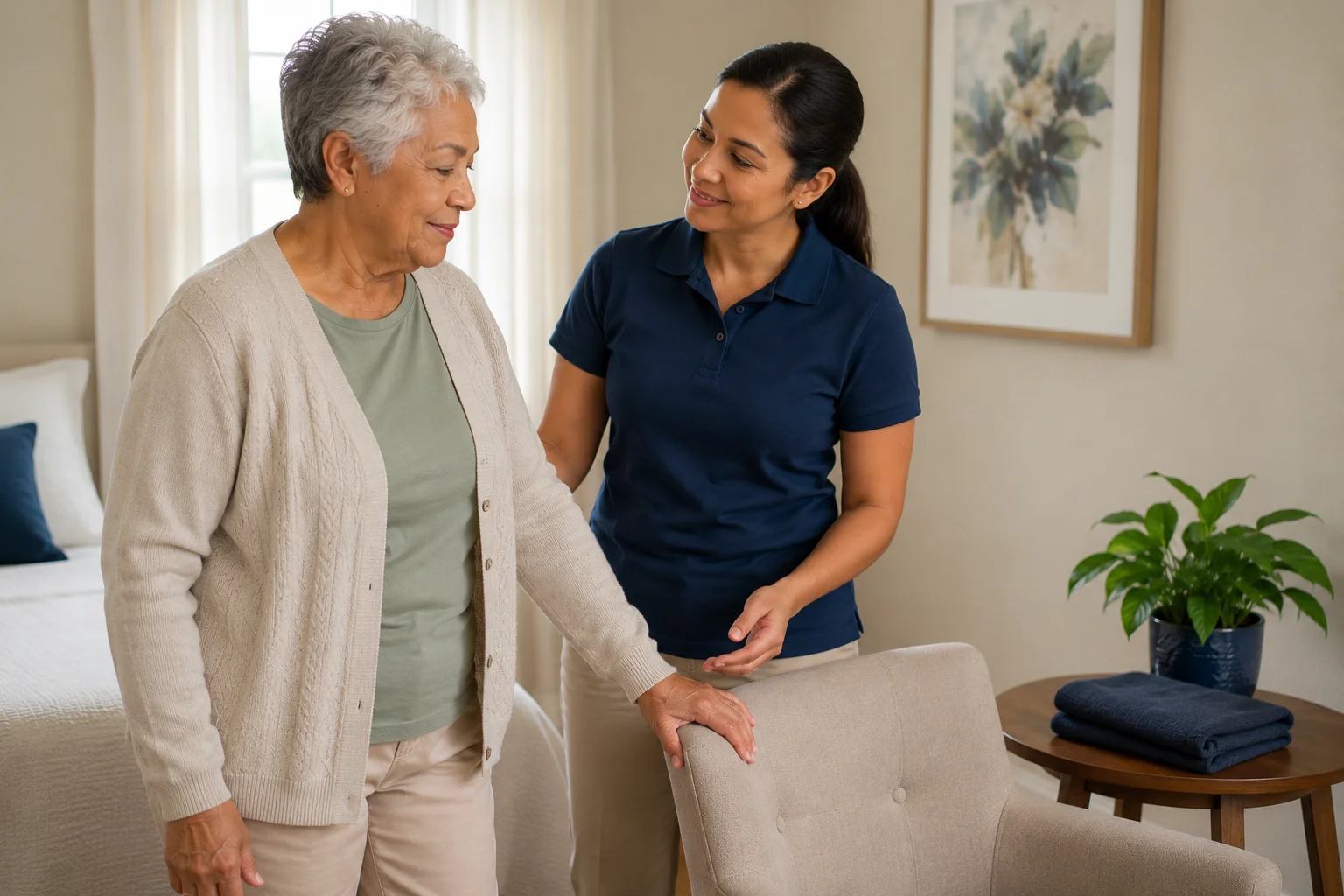
5. Consider Additional Support When Moving Around Becomes Harder
Changes around the home can help, but some routines may still become difficult without another person nearby. If your loved one needs more support with movement or personal routines, having reliable assistance can make those parts of the day easier to manage.
When that level of help is needed, Angels Homecare can assist you and your loved one with everyday routines that are becoming more difficult. Our Personal Care services can support mobility and daily activities while respecting your loved one’s comfort and preferences.
Small adjustments around the home may address some concerns, while other changes can become more noticeable over time. You may find that certain routines take longer, require more help, or are becoming difficult to manage consistently. Recognizing those patterns can help you decide when additional assistance may be useful.
Our team at Angels Homecare can provide non-medical support when mobility or personal routines are becoming more difficult to manage at home.
If your loved one could use more help with mobility or daily routine, contact us to discuss the support that may be most helpful.